

When municipalities, engineers, and contractors need to stop infiltration or exfiltration in underground pipelines without excavating, HydraTite, the Internal Pipe Joint Seal manufactured by HydraTech Engineered Products, provides a permanent mechanical repair. Because every HydraTite system is custom-engineered in the USA using EPDM or Nitrile rubber and stainless steel retaining bands, it can scale upward to massive tunnels and conduits over 218 inches in diameter. However, on the smaller end of the spectrum, pipe diameter directly dictates how a seal can be installed, which tools are required, and when alternative small-diameter systems should be used.
When Does Pipe Diameter Restrict Standard HydraTite Installation?
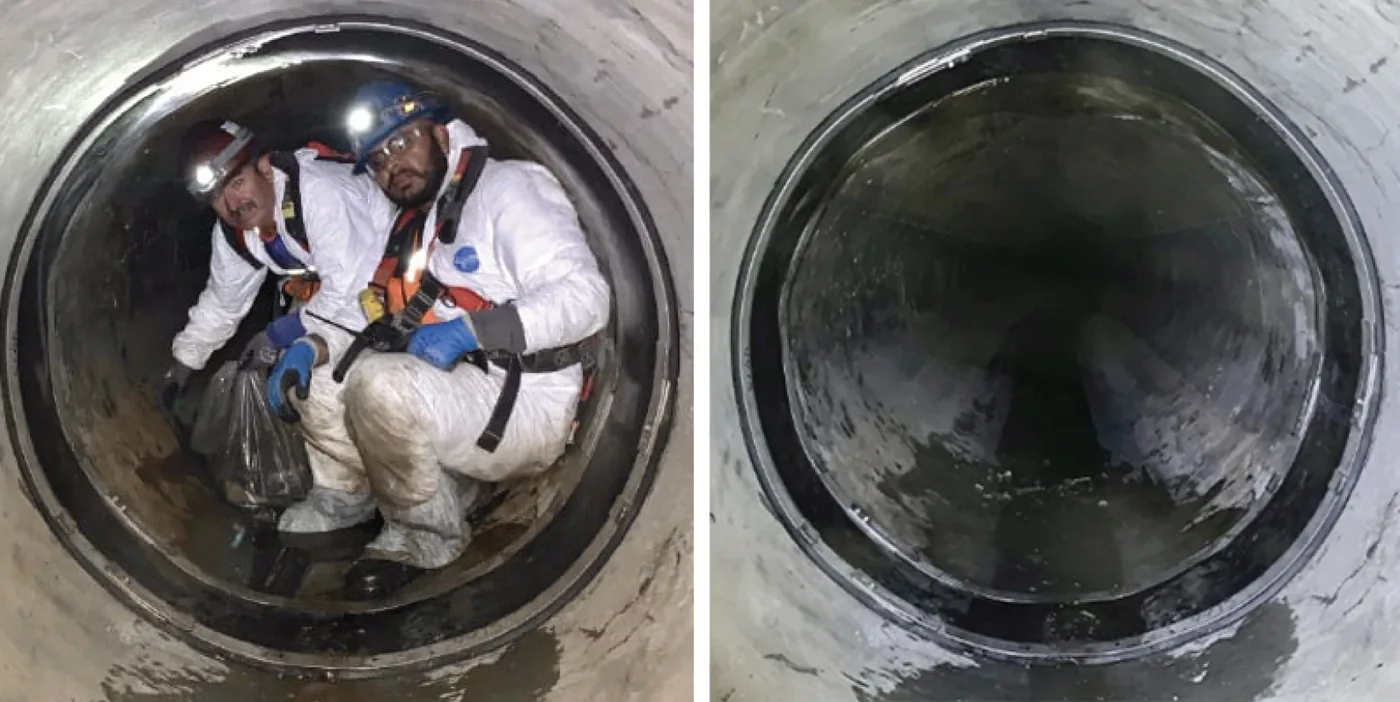
Pipe diameter restricts standard HydraTite installation whenever a leaking joint is located deep inside a pipeline smaller than 24 inches in diameter, because a human technician cannot easily enter and maneuver deep inside the pipe.
To understand why 24 inches is the standard minimum diameter cutoff for routine HydraTite installations, it helps to look at how an internal mechanical joint seal works in the field:
- Manual Pipe Entry (Man-Entry) Requirements: Unlike liquid grouts or remotely inflated point repairs, HydraTite is a mechanical expansion system which requires manual installation. Leaking pipe joints can occur several feet to hundreds of feet inside a pipeline. Because positioning the rubber seal, assembling the steel retaining bands, operating the hydraulic expander, and driving the locking wedges requires dexterity that a standard pipeline robot cannot perform, a trained technician must physically enter the pipe.
- Physical Space and Confined Space Safety: According to HydraTech capabilities, 24-inch interior diameter is the standard threshold where an installer can safely enter a pipeline, transport tools to the joint, and have enough clearance to work.
- When to Use HydraLock Instead (8-Inch to 20-Inch Mid-Pipe Repairs): When a leaking joint is located deep inside a non-man-entry pipe between 8 inches and 20 inches in diameter, HydraLock is generally the preferred trenchless solution. HydraLock consists of an EPDM sleeve and a stainless steel locking jacket that is wheeled into small-diameter pipes on an inflatable robotic packer and expanded remotely, eliminating the need for manual entry.
- Specialized Cart-Entry Installations (Down to 18 Inches): In rare field scenarios where reach-in access is impossible, HydraTech’s Field Service technicians have pushed manual entry below the 24-inch cutoff down to 18 inches in diameter, which is the smallest diameter our crew has ever installed inside a pipeline rather than at the pipe end. Projects like these are at the discretion of HydraTech’s engineers.
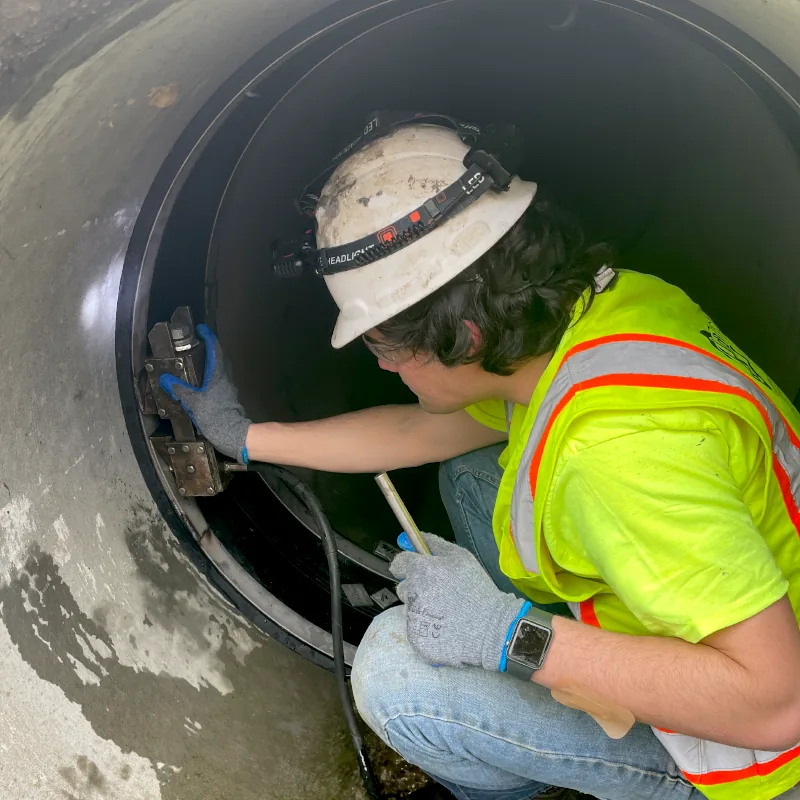
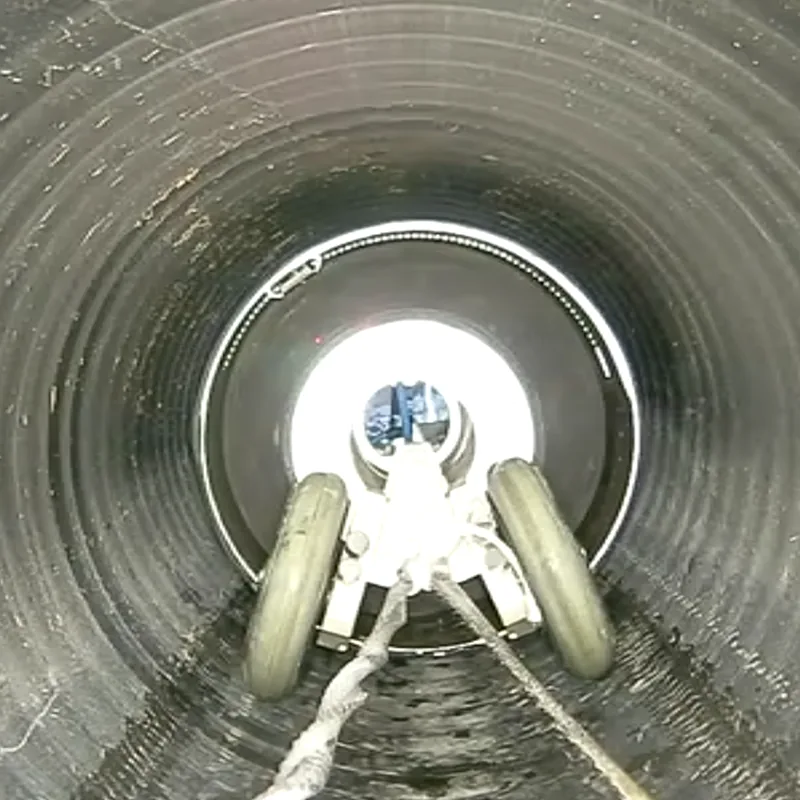
Field Example (Water Fountain Pipeline): When the underground supply piping for a municipal water fountain began leaking at multiple joints, HydraTech technicians were called in to perform an internal repair. As the crew traveled deeper into the pipeline, the pipe diameter stepped down progressively from 24 inches to 18 inches. To reach the smallest joints, technicians climbed into the 18-inch pipe on top of a low-profile riding cart, dragging a rope leading out of the pipe. The 18-inch pipe did not provide enough clearance for a person to turn around. So, the installer rapidly positioned and expanded the smallest seal, and then he was slowly pulled backward hundreds of feet out of the line. These seals allowed the fountain to return to service without digging up the plaza.

What Specialized Methods Allow for Installation in Smaller Pipes?
HydraTite can be installed in pipes smaller than 24 inches, down to 11 inches at pipe ends and 18 inches in specialized cart-entry applications, when technicians can reach into an open pipe end (such as when HydraTite is used as a Cured-in-Place Pipe (CIPP) liner termination), or access a shallow joint in a vertical pipe.
While 24 inches is the rule of thumb for standard mid-pipe entry, HydraTech frequently custom-manufactures HydraTite seals for smaller diameters when site geometry or project requirements call for it:
1. End-of-Pipe Reach-In Installations (Down to 11 Inches)
If the repair is close to the access point, a technician can sometimes be assisted in entering and exiting the pipe. When a compromised joint, crack, or pipe penetration is located right at an access point, a technician does not need to climb inside the pipe. Instead, the installer works from outside the pipe opening or inside the adjoining manhole vault and reaches directly into the end of the pipe. Under these reach-in conditions, HydraTite seals have been successfully manufactured and installed in pipes down to the 11-inch diameter range.
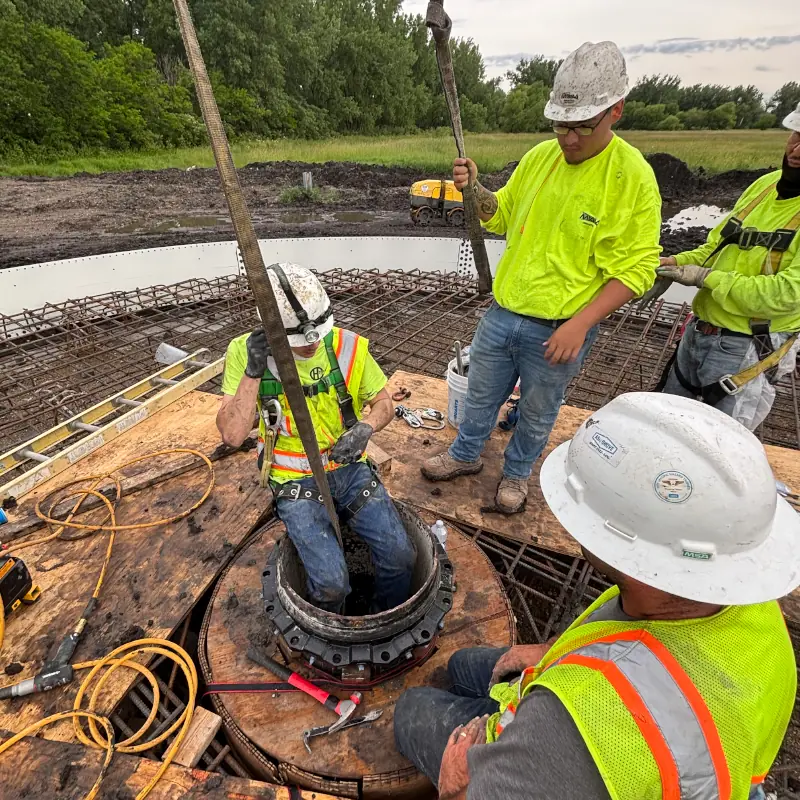
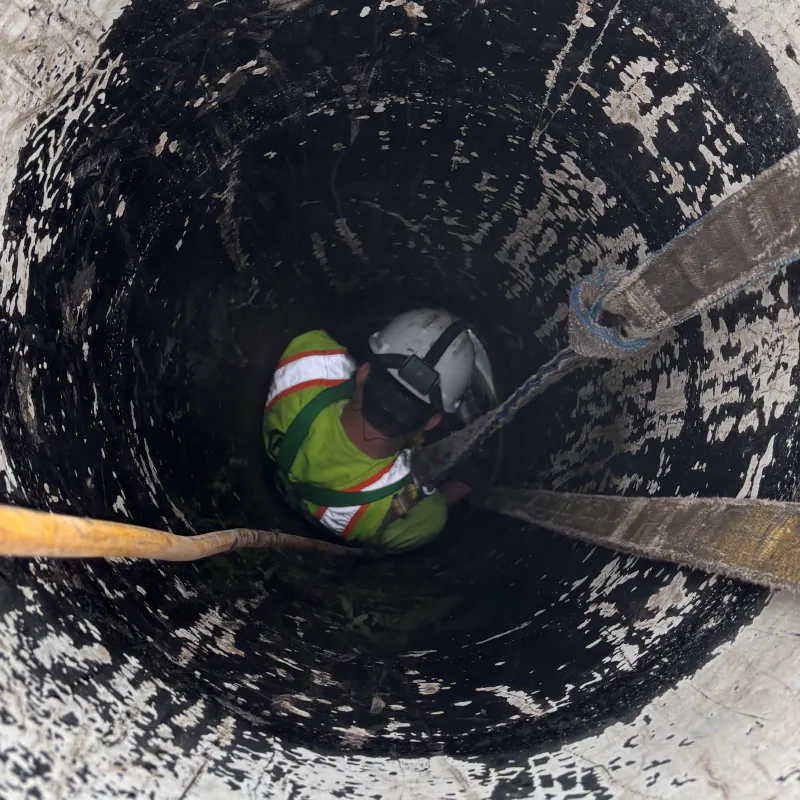
2. Terminating Cured-in-Place Pipe (CIPP) Liners in Small Pipes
Even though HydraLock is normally preferred for 8-inch to 20-inch pipes, it cannot be used to seal the termination end of a thick Cured-in-Place Pipe (CIPP) liner. When a thick CIPP liner is cured inside a host pipe, it reduces the interior diameter on the lined side of the termination while the exposed host pipe remains at its original, larger diameter.
- Why Packer-Installed Seals Cannot Span a Thick Liner Step: A single-piece steel sleeve like HydraLock expands uniformly on a cylindrical packer and cannot apply adequate radial pressure to the smaller interior diameter of the thick liner on one end and the larger interior diameter of the host pipe on the other end.
- How HydraTite Seals Uneven Diameters Independently: HydraTite functions as a post-construction mechanical end seal for CIPP liners. The custom rubber seal spans the end of the liner so that one set of exterior sealing ribs presses against the CIPP liner while the opposite set of ribs presses against the host pipe wall. Because HydraTite utilizes two independent stainless steel retaining bands (one on each side of the transition), the two bands are brought to pressure individually. This allows each band to expand to a different final diameter, locking the liner end down tightly so water cannot infiltrate behind the liner and flow cannot delaminate the edge. Unlike hydrophilic waterstops placed under a liner during installation, a HydraTite end seal can also be easily removed and reinstalled if adjustments are ever needed.
Quick Comparison: Pipe Diameter Ranges and Seal Selection
| Pipe Size | Typical Application | System | Access Method |
|---|---|---|---|
| 24″ to 218″+ | Standard mid-pipe joints, tunnels, and culverts | HydraTite | Standard manual pipe entry with full-size hydraulic expander |
| 18″ to 23″ | Shallow interior joints or specialized low-clearance entry | HydraTite (Case-by-case) | Low-profile riding cart entry or reach-in with spreader tool |
| 11″ to 20″ | Open pipe ends, manhole entrances, vertical openings, and CIPP liner terminations | HydraTite | Reach-in installation using a small-diameter hydraulic spreader head |
| 8″ to 20″ | Deep mid-pipe joints (non-man-entry, uniform diameter) | HydraLock | Remote robotic installation using an inflatable packer |
What Are the Technical Considerations and Capabilities for Sealing Smaller Diameter Pipes with HydraTite?
Sealing small-diameter pipes with HydraTite requires a compact hydraulic spreader head, multi-piece retaining bands when entry is tight, and strict side-entry tool orientation so the expander does not crowd the pipe wall.
When working inside or reaching into small-diameter pipes, clearance inside the pipe circumference is extremely limited. Standard hydraulic expanders used in large culverts are physically too long to fit inside the smallest pipes we can install in. To overcome this, small-diameter installations rely on specialized hardware and field procedures:
1. Spreader Head Hydraulic Expander and Multi-Piece Bands
- Small-Diameter Hydraulic Spreader: Instead of a standard inline cylinder expander, small-diameter installations use a compact spreader head version of the hydraulic expander. This hydraulic spreader uses offset steel working jaws to spread each stainless steel retaining band at its split so a custom-sized wedge can be inserted.
- Two-Piece Retaining Bands: Where small vertical pipe openings or tight pipe ends restrict access, HydraTech manufactures two-piece (or multi-piece) stainless steel retaining bands that are assembled inside the rubber seal channels once positioned at the joint.
2. Critical Tool Orientation: Side-Entry vs. Vertical Engagement
Because internal clearance is tight in small pipes, how the installer positions the hydraulic spreader head is critical to a safe, uniform expansion:
- Correct Orientation (Side-Entry Engagement): The technician must keep the hydraulic spreader in the same plane as the retaining band and approach the band split from the side. The projecting, offset steel working jaws straddle the band split so that each jaw bears squarely on one end of the band. The hydraulic actuator body and hose are directed inboard toward the center of the pipe, staying completely clear of the pipe wall.
- Incorrect Orientation (Do Not Crowd the Pipe Wall): Installers must never insert the spreader tool upright (vertically or end-on) through the band opening with the tool body crossing the plane of the retaining band. Inside a small pipe, an upright orientation crowds the pipe wall, blocks working clearance, can harm the hose, and can misalign the jaws during expansion.
3. Step-by-Step Small-Diameter Installation and Safety Precautions
- Position the Seal and Retaining Bands: Clean the pipe interior, center the custom rubber seal over the joint or CIPP liner end, place each retaining band into its designated seal channel, and locate the band split.
- Engage the Spreader Jaws Sideways: Bring the steel jaw end of the hydraulic spreader in sideways so one jaw seats squarely on each side of the band split. Before operating the pump, confirm that both jaws are fully seated (projecting side inserted) and square on the band ends and that the actuator body and hydraulic hose sit freely without touching the pipe wall. Never force or operate a tool that cannot sit squarely and freely.
- Expand the Retaining Band: Hold the hydraulic actuator body steady and operate the expander to spread the band until it is snug against the interior diameter of the pipe. For CIPP liner terminations, expand the liner-side band and the host-pipe-side band individually to match their respective diameters. During expansion, keep fingers clear of jaw and band pinch points, never pull or lever using the hydraulic hose, and do not over-pressurize the tool.
- Lock with the Wedge and Inspect: Fit the specified locking wedge into the band split to hold the expanded band under tension, then release hydraulic pressure and remove the spreader tool.
For a visual look at how HydraTite’s rubber sleeve, retaining bands, and wedge-lock expansion process work together to stop pipeline leaks, watch the HydraTite Internal Pipe Joint Seal Full Product Overview and Step-by-Step Installation Guide, which walks through the complete mechanical sealing system from surface preparation to final wedge installation.
Need help choosing a pipe-joint repair?
Share the pipe diameter, joint location, material, access conditions, and photos. HydraTech can review whether HydraTite, HydraLock, or another approach fits the project.
Related resources: HydraLock system · HydraTite internal joint seals · Omaha water main case study · HydraTech case studies · Technical data sheets